Brighton Road – Bridge Collision Beams

Client:
Network Rail

Main Contractor:
SRE VolkerFitzpatrick
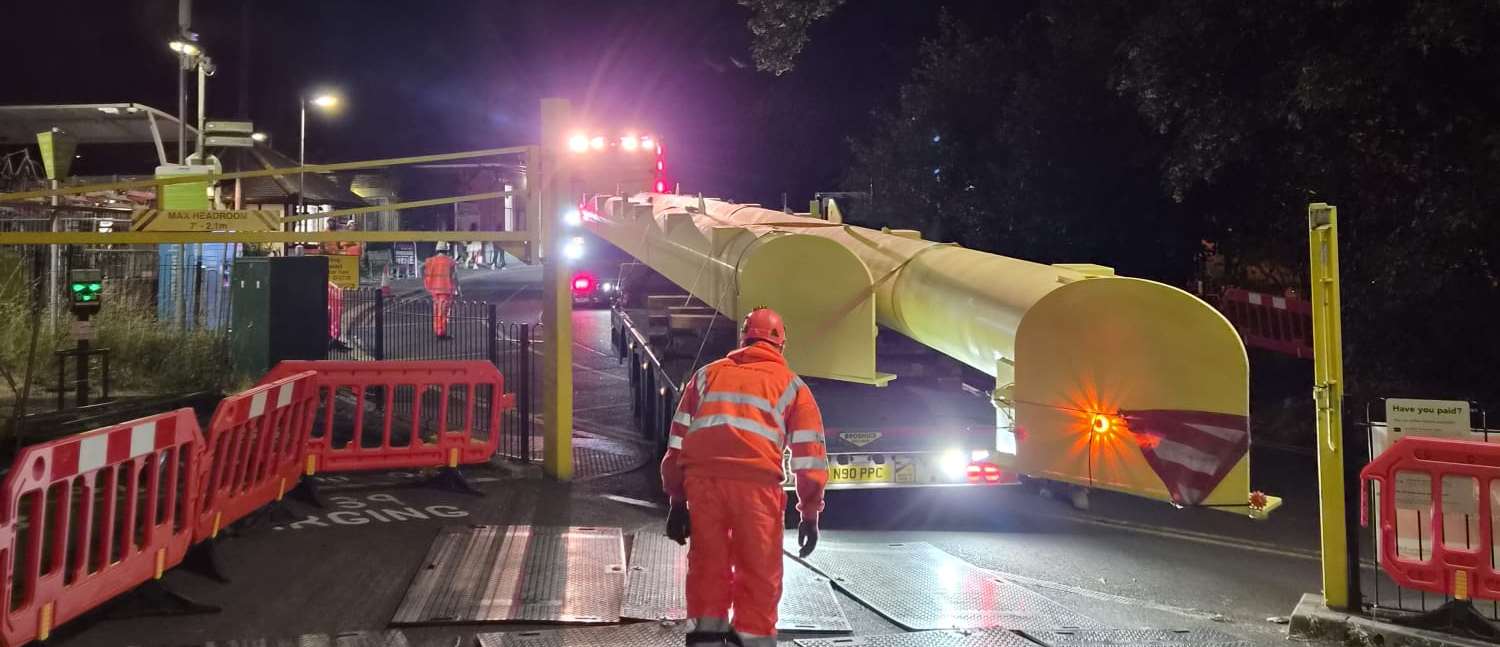
Bridge strikes are a major cause of infrastructure damage, train delays, and traffic diversions, but despite efforts to improve signage and educate drivers, Brighton Road Bridge continued to be struck. As a result, a permanent solution was needed to protect the structure and improve service reliability for the thousands of daily rail passengers and highway users. Four Tees Engineers (FTE) were appointed by SRE Volker Fitzpatrick to fabricate and install steel collision protection beams that had been designed by Tony Gee & Partners (TGP) along with the detailing and fabrication of the associated steelwork support structures.
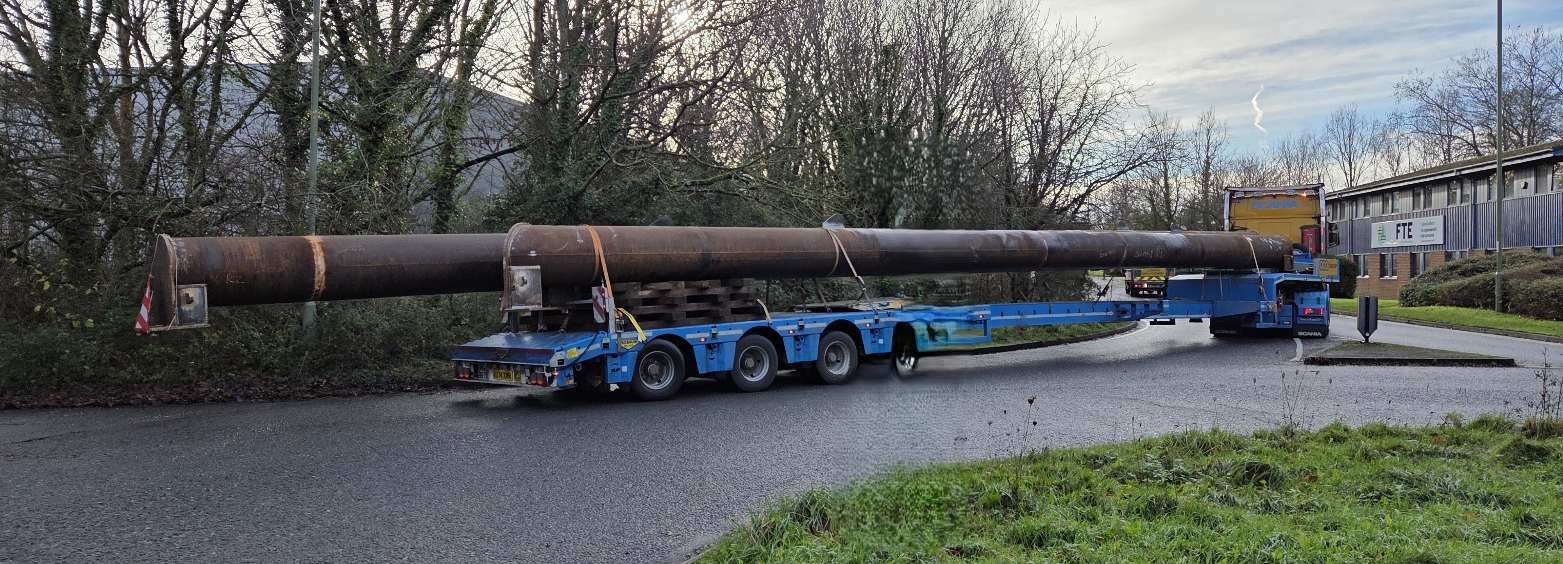
The protection beams at 26.3m and 24.6m are believed to be among the longest ever used in the UK, and 744mm in diameter and totalling 27 tonnes of steel. The associated four support structures, each weighing 2 tonnes, were also detailed and fabricated by FTE, giving a total of 35 tonnes of fabricated steelwork to protect the Bridge from impacts. In support of FTE’s commitment to more sustainable production, recycled steel pipeline sections were sourced for fabrication of the new collision protection beams from Norway’s Ormen Lange Gas Field.
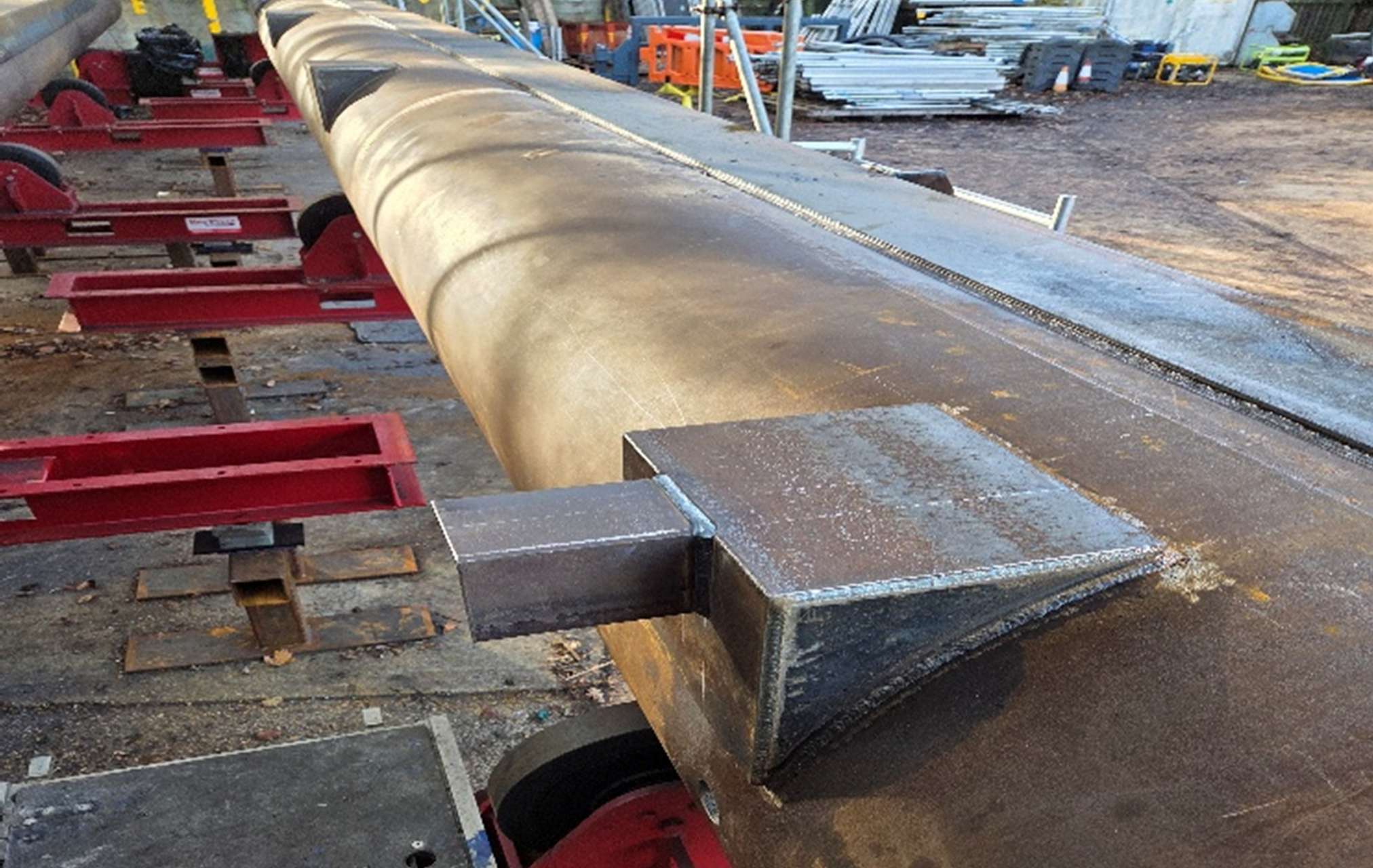
The recycled tubes were tested in situ to ensure full compliance with the project specification before being welded together at the steel supplier’s facility and the oversized lengths of steel tube were then shipped to FTE’s fabrication shop. Upon receipt, the beams were carefully manoeuvred and positioned for fabrication within the FTE yard and workshop using motorised rollers. FTE then cut and angled the beams to length, adding the end detail and bearing plates to the very specific and exacting tolerances specified.
FTE’s intelligent integration ensured that the challenging project to protect Brighton Road Bridge from vehicular impact was completed sustainably and accurately, reducing full lifecycle costs, providing structural resilience, and preventing inconvenient delays to passengers and the travelling public.