The market for zero-emission buses in the UK seems certain to experience significant growth over the next decade. The order pipeline for new vehicles is likely to top 21,000 over this period according to DoT estimates (source Sustainable Bus). That estimate implies a massive expansion in charging capacity requirements.
The growth estimates are highly back-loaded. In other words, steady but substantial growth up to around 2033 and rapid growth beyond this. So there’s an inevitable question about how rapidly the charging infrastructure that’s currently being put in place could be expanded when needed.
Growth is likely to be muti-faceted, encompassing intercity as well as urban networks and a range of vehicles from minibuses to double deckers and flexibuses.
eHGVs Poised For Take-Off
Similarly, the market for zero emission HGVs seems close to a tipping point. This is due to rising diesel costs and a growing and attractive choice of zero emission commercial vehicles covering diverse use cases. Often, it’s grid connectivity rather than user demand that limits faster growth.
In Q4, the UK registered 179 new eHGVs, up 251% YoY, which helped surpass the milestone of 1,000 new zero emission truck registrations, of which more than half happened in 2025 (EV Infrastructure News).
Alongside the growth in zero emission buses and eHGVs there are rapid evolutions in battery and charging technologies that need to be accommodated.

Adaptable Charging Infrastructure Is Essential
The design challenge for large-scale EV fleet charging facilities is as much about tomorrow as it is about meeting today’s needs.
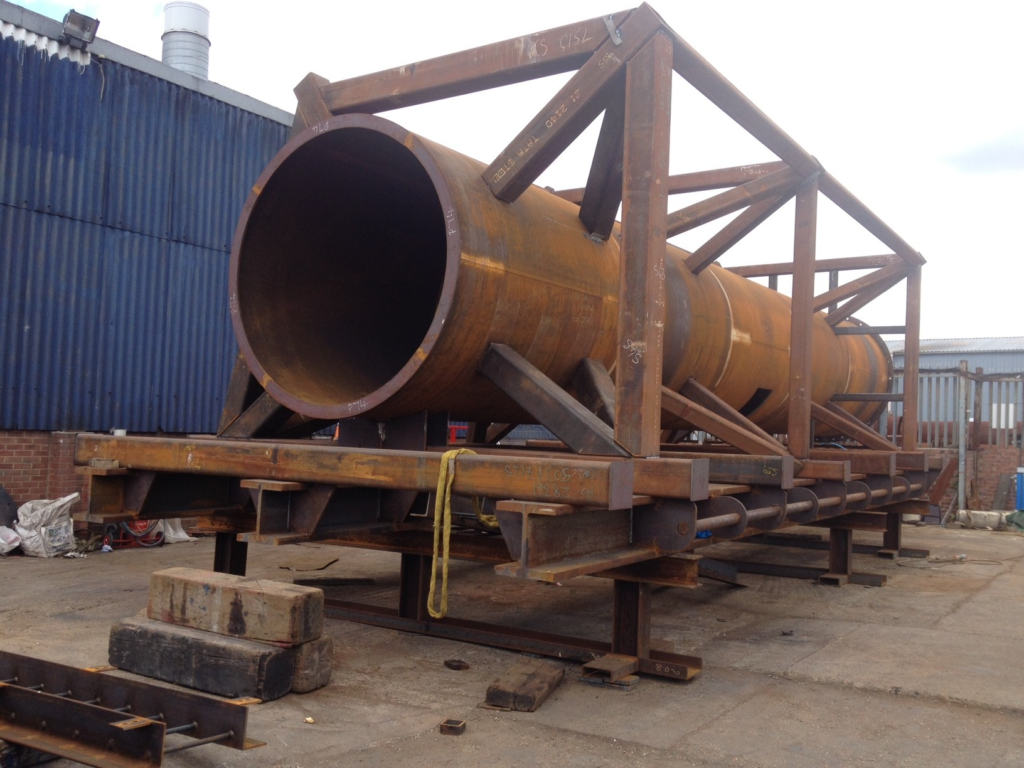
For FTE’s design team it’s a priority to design structures to be as adaptable and future-proof as possible from the outset. This is in addition to the normal requirements of being practical and easy to build with minimal operational disruption.
Structures such as charging gantries and bays are designed with modularity in mind.
For example, charger attachment interfaces that are designed to be unbolted and replaced with updated attachment details as technology evolves, avoiding costly structural alterations and the need for extensive repainting.
Similarly, where future expansion is anticipated, the structure can be configured to allow additional bays to be added by bolting new truss sections onto the existing framework. This approach minimises future disruption, reduces lifecycle costs, and enables the asset to evolve with operational requirements.
The design philosophy of EV charging facilities is to build-in opportunities rather than technical dead-ends.
To discover more about FTE’s approach to integrated design and fabrication for structural steelwork, head over to our information hub below.