Whole lifecycle costs are an increasingly important consideration for all types of structure, as is resilience in the face of more hostile and unpredictable weather conditions.
As a result, resilience and time-to-first-maintenance are major design considerations. This has implications for detailing how different parts of the structure are joined, material selection and protective coatings.
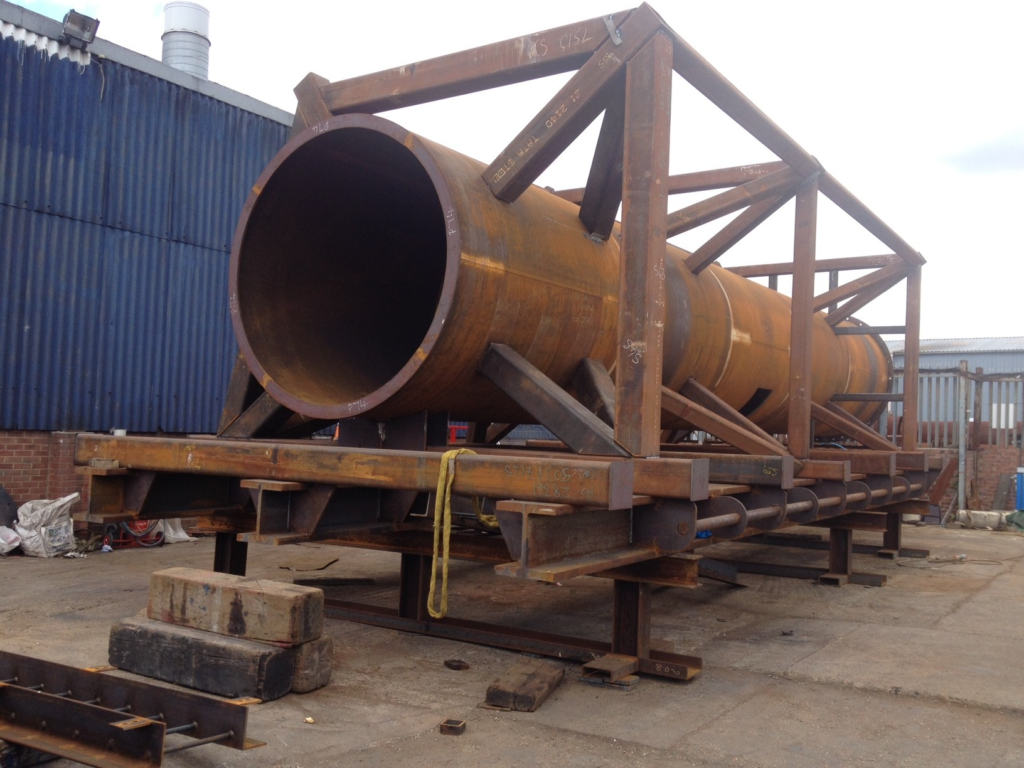
Many of FTE’s projects involve steel fabrication for marine and coastal structures. Locations where they’ll be subjected to storms, waves, high winds and salt water – among the most hostile environments possible. We’ve supplied fabrications for use in Antarctica and ramp structures for lifeboat stations.
In-House Expertise
These are projects where having design, detailing and fabrication expertise in house comes into its own – communication is simplified and everyone has the same goal. FTE is accredited to CE mark steelwork Execution class 3.
In-house expertise means that design modifications and specifications for materials, and protective coatings needed to withstand the marine environment can be made early enough in the programme not to affect the completion date.
Resilience By Design
One recent project involved fabricating offshore nesting structures for kittiwakes. These were to be located 1km off the Suffolk coast.
Early on, FTE highlighted issues with the design of the proposed ‘crinkly tin’ roof, which was unsuitable for the intended environment. The design was amended to use a 6mm steel plate, which also entailed designing a new roof-to-column connection detailing.
The intelligent integration design and fabrication approach allowed these changes to be made efficiently without interrupting the project plan.
Protective Treatments
Protective coatings are a vital design consideration. Options include hot dip galvanizing, thermal spraying, powder coating and painting with a modern epoxy or fluoropolymer treatment. In the case of the kittiwake nesting platforms, a CX corrosion category was specified due to the location the structures were going to be placed (i.e. marine or offshore environment) and therefore International Paints Interzone 954 to a DFT of 400-microns was used, giving a time-to-major first-maintenance design interval of 25+ years.
Talk to FTE about how intelligent integration could help you deliver resilient steel fabrication projects on time and within budget. You can find out more about how it works and how it could benefit your projects by accessing our free information hub.