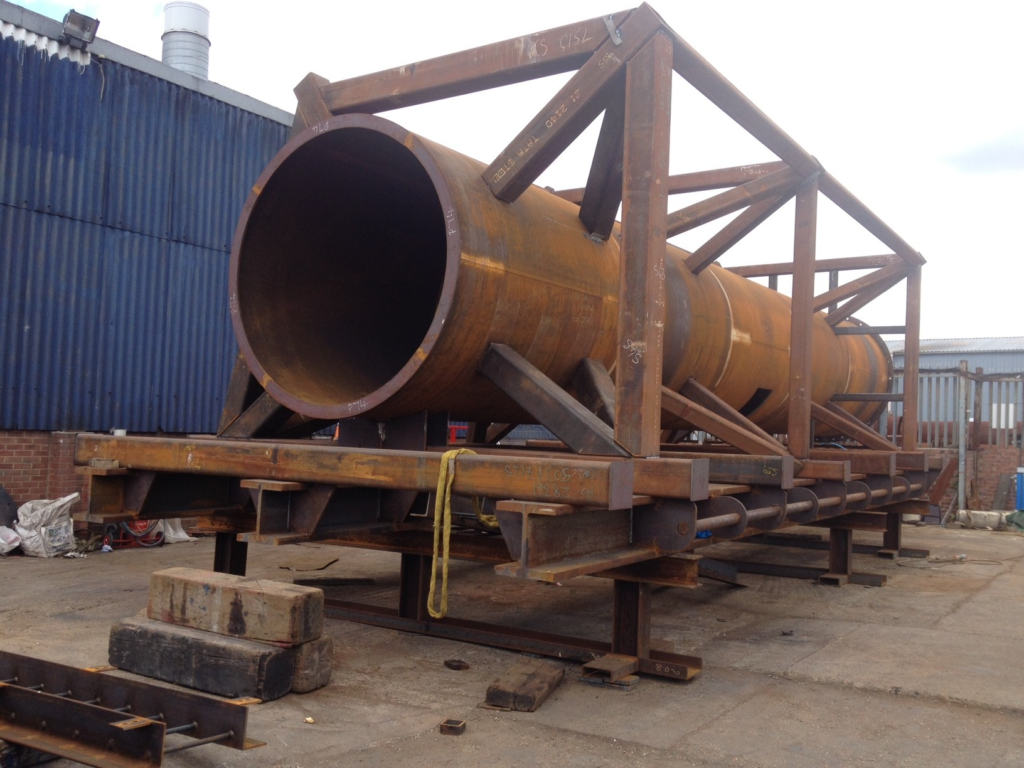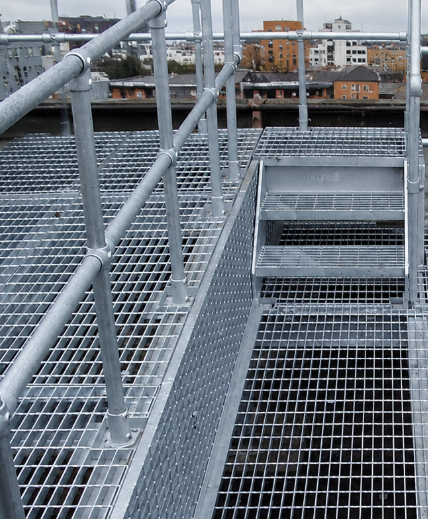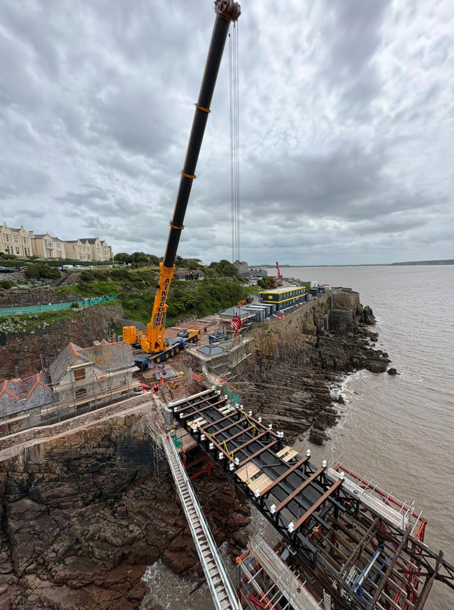
Four-Tees Engineers (FTE) are currently undertaking the £5m specialist steelwork package on the restoration of the iconic Birnbeck Pier in Weston-Super-Mare for Principal Contractor Mackley. These works include the dismantling and replacement of the life expired metalwork on the 317m Grade II Listed structure, the only pier in the UK to connect an island.
Installation of every component first time every time is crucial to any marine project like Birnbeck Pier. Delivery certainty comes from FTE applying every opportunity they have taken to learn from every marine project and capturing and transferring that learning and best practice into the next.
Delivering a new Wharf in the Antarctic, isolated structures in the North Sea and experience on numerous lifeboat stations, port and harbour side projects enabled FTE to work alongside Mackley early in the bid stage. In doing so identifying the potential risks, suggested best practice and identify the most efficient and effective solution for their customer.
For example, the Rothera Wharf Antarctic project required over 1000 tonnes of new fabricated steelwork components that would make up the internal structure of the wharf. These structures were pre-manufactured in the UK as a “kit of parts” and transported 11,000 kilometres to Rothera on Adelaide Island, Antarctica. Delivering in marine environments like this robustly test and interrogate the adequacy of your quality processes, your team’s attention to every minute detail, their creativity and resilience.
The North Sea – Artificial Nesting Structures (ANS) required three 65 tonne artificial nesting structures to be installed about 1 km off the East Suffolk Coast. The original design for the three offshore structures was principally developed for the assembly of the body of the structure being on the quayside with assembly of the roof at sea and to a programme that was extremely constrained. FTE immediately began working with the Ørsted & Red 7 Marine team to fundamentally change the design and installation strategy, taking advantage of FTE’s learning from the Antarctica project.
The ANS design and installation strategy was completely refocussed with the adoption of a modular kit form approach. This would minimise the extent of “at sea” assembly and have the fewest components possible whilst taking account of the sea borne transportation and lifting capacity constraints. In addition, FTE de-risked the build with improved assembly detailing, design improvements and management of appropriate tolerances, alternative design, protection and coatings reducing build stage risks and creating a more resilient and lower operating and maintenance costs solution.